
Blockchain technology improves security, increases transparency, reduces reliance on intermediaries, and helps create reliable digital records. These advantages make it valuable across industries such as finance, healthcare, supply chains, and government services by improving efficiency and trust.
Improved Security and Data Integrity
One of the greatest strengths of blockchain technology is its ability to protect data. Information is stored across a distributed network instead of a single server, making it much harder for attackers to alter or delete records. Each new transaction is linked to previous ones through cryptographic methods, creating a chain that is extremely difficult to tamper with.
This design helps businesses reduce fraud, prevent unauthorized changes, and maintain accurate records. Financial institutions, healthcare providers, and logistics companies use blockchain to strengthen data protection while maintaining reliable audit trails.
Greater Transparency and Trust
Blockchain technology allows authorized participants to view the same shared record, reducing confusion and improving accountability. Every approved transaction is recorded with a timestamp, making it easier to verify when changes occurred.
This level of visibility is especially useful in supply chain management, where companies can monitor products from production to delivery. Consumers also benefit because they gain more confidence in the authenticity and origin of goods. Shared digital ledgers help organizations improve trust while simplifying business processes and reducing disputes.
Lower Costs and Faster Operations
Traditional transactions often require banks, payment processors, or other third parties to verify information. Blockchain technology can streamline many of these processes by allowing participants to validate transactions through the network itself.
This can reduce processing fees, minimize paperwork, and speed up settlement times. Smart contracts further increase efficiency by automatically executing agreements once predefined conditions are met. Businesses save time, reduce manual work, and improve operational accuracy without sacrificing reliability.
In addition, organizations can automate routine tasks, allowing employees to focus on higher-value activities. Faster workflows often lead to better customer experiences and improved productivity.
Wide Applications Across Industries
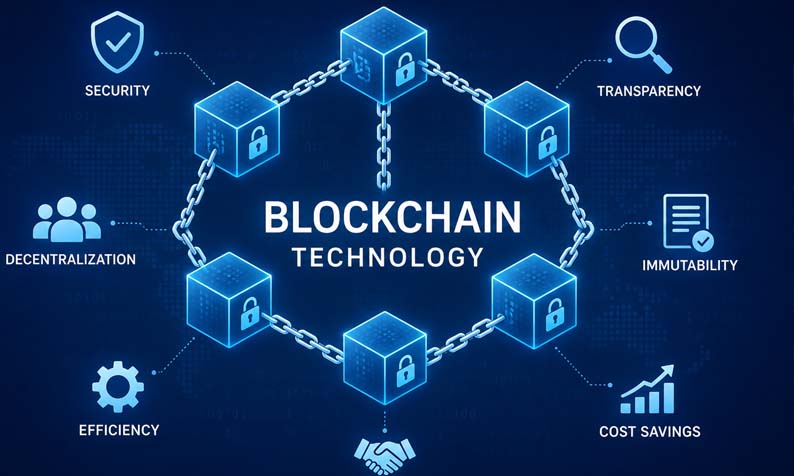
Blockchain technology is no longer limited to cryptocurrencies. It supports many practical uses in different sectors.
Healthcare organizations use it to improve medical record management while protecting patient privacy. Supply chain companies track goods to reduce counterfeiting and improve traceability. Financial services rely on blockchain for secure cross-border payments and digital asset management. Governments explore digital identity systems and secure record keeping, while real estate companies use blockchain to simplify property transactions.
As the technology continues to mature, more organizations are discovering ways to improve efficiency, strengthen security, and build trust through decentralized systems.
Conclusion
Blockchain technology offers meaningful benefits, including stronger security, greater transparency, lower operating costs, and faster business processes. As adoption grows across multiple industries, it is becoming an important tool for improving data management, increasing trust, and supporting digital transformation.
Read about PLN to USD
FAQs
What is blockchain technology used for?
It is used for secure record keeping, digital payments, supply chain tracking, healthcare data management, and many other business applications.
Is blockchain technology secure?
Yes. Its decentralized structure and cryptographic protection make unauthorized changes extremely difficult.
Can blockchain technology reduce business costs?
Yes. It can lower transaction fees, automate processes with smart contracts, and reduce the need for intermediaries.
Does blockchain technology only support cryptocurrencies?
No. It is widely used in finance, healthcare, logistics, government, real estate, and many other industries beyond digital currencies.
About the Author